
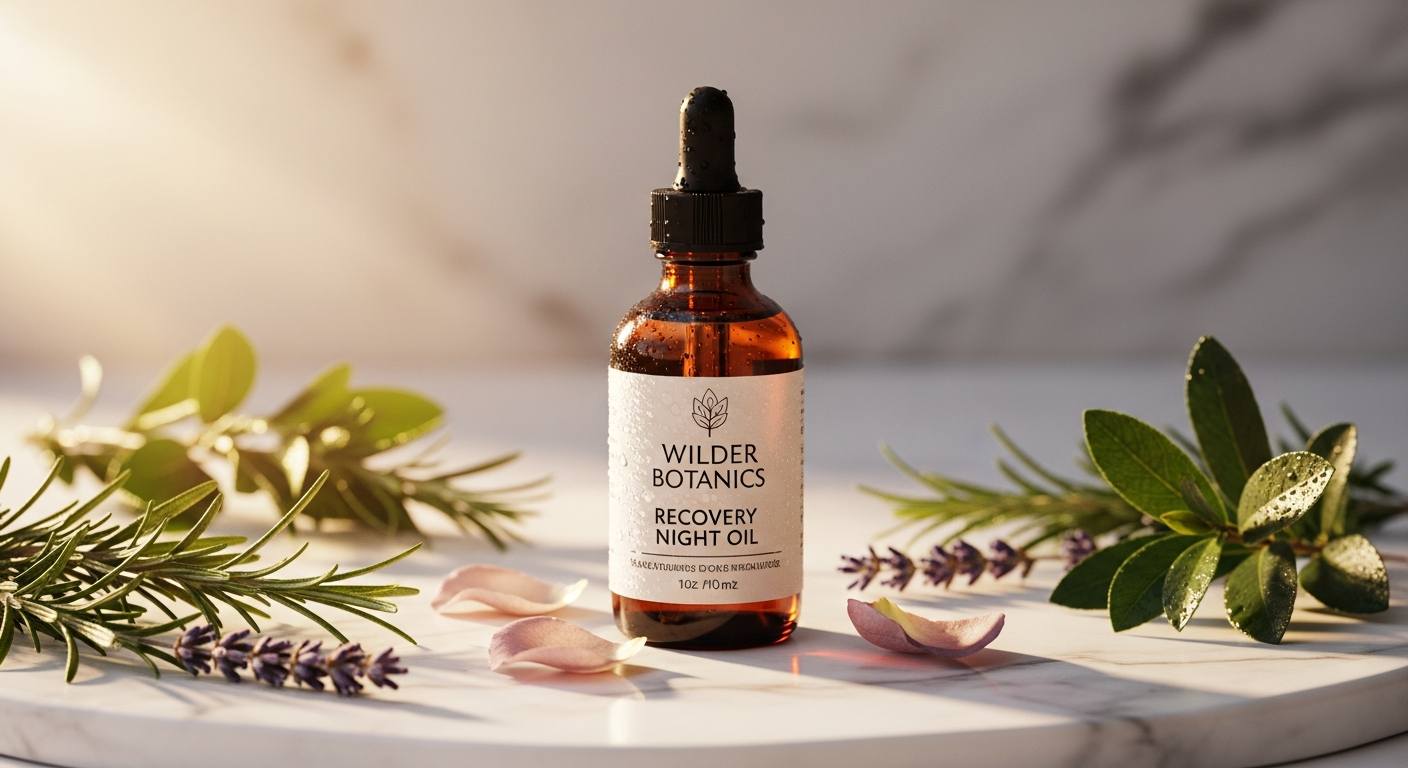
Discover what made Wilder Botanics Award-Winning Recovery Night Facial Oil a cult favorite for 40+ skincare. Explore its award-winning formula, botanical benefits, and why beauty experts are still seeking alternatives.
Skincare launches number in the thousands annually, yet fewer than 5% achieve the cult status that inspires customers to repurchase for years. The Wilder Botanics Recovery Night Facial Oil earned two prestigious Beauty Shortlist Awards in 2025—Best Overnight Oil and Best Skincare for 40+—cementing its legacy as one of the most coveted facial oils of the decade. Before the brand's closure, this luxury botanical oil married scientific efficacy with authentic naturopathic wisdom rooted in co-founder Rachel Landon's 20 years of herbalist practice.
With a stellar 4.88 out of 5-star rating from 34 verified reviews, customers experienced genuine transformation. This product represented something rare in the beauty industry: a formulation that refused to compromise on ingredients, ethics, or efficacy. The overnight facial oil market became crowded with mediocre options, yet this one stood apart through its proprietary approach and undeniable results.
Discover what made the Wilder Botanics Recovery Night Oil a cult favorite worth seeking out today.
The Double-Infused Rose Oil Foundation That Changed Everything
Wilder's Proprietary 42-Day Double-Infusion Process
At the heart of the Recovery Night Oil lay a deceptively simple yet remarkably potent innovation: the 42-day double-infused rose oil base. This wasn't standard rose oil sourced from a supplier. Wilder's team performed an extended infusion process that fundamentally altered the oil's molecular structure and nutrient density. The 42-day timeline wasn't arbitrary—it represented the optimal window for phytonutrient extraction without degrading delicate botanical compounds.
Most commercial rose oils undergo single-infusion methods that take days, not months. The extended infusion allowed wild-crafted roses to release their full spectrum of beneficial compounds into the carrier oil, creating a base that functioned less like a fragrant oil and more like a concentrated botanical elixir.
Why Extended Infusion Increases Phytonutrient Bioavailability
Extended infusion fundamentally changes what the skin receives. When botanical material steeps for six weeks, cell walls break down gradually, releasing compounds that remain inaccessible in shorter extraction windows. This slow, deliberate process means more phytonutrients become bioavailable—the skin can actually absorb and utilize them rather than having them sit on the surface.
The 42-day methodology also prevented the heat damage common in accelerated extraction methods. No high temperatures meant fragile antioxidants and vitamins remained structurally intact. Customers weren't applying degraded botanical matter; they were applying precisely preserved plant intelligence.
How the Signature Base Oil Differs from Standard Rose Oil Products
Standard rose oil products often rely on synthetic fragrance compounds or heavily processed botanical extracts. The Recovery Night Oil's double-infused base bore almost no resemblance to these formulations. While typical rose oils deliver aesthetic value, Wilder's version delivered therapeutic value rooted in actual plant chemistry.
The signature base created a synergistic foundation for the remaining botanical actives. Rather than ingredients working independently, they amplified each other's effects. The rose oil didn't simply carry other botanicals; it enhanced their absorption and efficacy through its own complex composition.
The Role of Wild-Crafted Roses in Formulation Potency
Wild-crafted roses differed fundamentally from cultivated varieties. Plants growing in uncultivated environments develop stronger defensive compounds and higher nutrient density as survival mechanisms. These wild roses contained more concentrated phytonutrients than greenhouse-grown alternatives.
Wilder sourced these roses through ethical channels that supported sustainable harvesting practices. The brand's commitment to wild-crafted ingredients wasn't marketing language—it was a core operational principle that directly influenced potency. Customers could feel the difference in application, noticing how the oil seemed to activate skin rather than merely hydrate it.
Extraction Methods That Preserve Botanical Integrity
The extraction methodology mattered as much as ingredient sourcing. Wilder employed infusion rather than distillation, avoiding the high temperatures that destroy volatile compounds. This gentler approach sacrificed some yield in exchange for maximum potency—economically inefficient but scientifically superior.
The handcrafted production in the North London studio ensured batch-to-batch consistency and quality control impossible in industrial settings. Small batches meant every bottle received attention, every infusion achieved its intended timeline, and nothing was rushed to meet mass-market deadlines.
Comparison to Single-Infused Alternatives on the Market
When compared to competitor products claiming rose oil bases, the Recovery Night Oil's double-infusion distinction became obvious during use. Single-infused oils felt lighter, more cosmetic. Wilder's version felt substantive, like applying concentrated plant knowledge rather than a fragrant carrier.
This distinction explained the premium pricing. Customers weren't paying for a rose oil product; they were paying for a rose oil system developed through decades of naturopathic expertise. The comparison to alternatives always favored the Recovery Night Oil because its formulation philosophy was entirely different.
The 200+ Phytonutrient Complex: Science Behind the Glow
Breakdown of Key Botanical Extracts
The formulation contained a deliberately curated botanical ensemble. Pomegranate extract contributed powerful polyphenols known for antioxidant activity. Rose hip brought vitamin C and lycopene for brightening and protection. Starflower (borage) oil supplied gamma-linolenic acid, essential for skin barrier function and elasticity. Calendula CO2 extract delivered antimicrobial compounds and skin-soothing properties.
This wasn't a random assortment. Each botanical addressed specific skin concerns while complementing the others. Pomegranate's strength supported rose hip's brightening action. Starflower enhanced barrier function while Calendula soothed potential irritation. The synergy meant results exceeded what any single ingredient could achieve alone.
Eco Marine Algae's Role in Hydration and Mineral Replenishment
Eco marine algae served a dual function within the formulation. First, it delivered trace minerals—magnesium, calcium, potassium—that aging skin often lacks. These minerals support cellular function at the fundamental level, allowing skin to hydrate more efficiently. Second, the algae provided polysaccharides that formed a protective layer, reducing transepidermal water loss throughout the night.
This aquatic botanical perfectly complemented the terrestrial plant extracts. While pomegranate and rose hip addressed surface concerns, marine algae worked at deeper structural levels. The 4.88-star customer reviews frequently mentioned waking with plump, hydrated skin—the direct result of this mineral-infused approach.
How Phytonutrients Trigger Cellular Renewal During Sleep
The skin's circadian rhythm peaks during nighttime hours. Cell turnover accelerates, collagen synthesis increases, and the skin enters a receptive state. The Recovery Night Oil's phytonutrient complex synchronized with this natural rhythm, delivering compounds precisely when skin could utilize them most effectively.
Polyphenols from pomegranate activated cellular signaling pathways associated with renewal. Rose hip's vitamin C stimulated collagen production. Starflower's GLA supported barrier repair. Rather than fighting the skin's nighttime biology, the formulation harmonized with it, becoming more potent precisely when applied.
Collagen-Boosting Mechanisms Within the Formulation
Collagen decline defines aging skin. The Recovery Night Oil addressed this through multiple mechanisms. Vitamin C from rose hip stimulated fibroblast activity, the cells responsible for collagen production. Polyphenols from pomegranate protected existing collagen from degradation by free radicals. The mineral-rich marine algae provided structural components collagen synthesis required.
Customers documented improved firmness and elasticity through consistent application. This wasn't temporary plumping from hydration; it represented actual collagen remodeling. The 40+ demographic, which frequently experiences dramatic collagen loss, responded most noticeably to this multi-pathway approach.
Skin-Balancing Properties for Mature, Compromised, and Sensitive Complexions
One formulation serving multiple skin types seems paradoxical, yet the Recovery Night Oil achieved this through intelligent ingredient selection. For mature skin, the botanical actives provided anti-aging sophistication. For compromised skin, the barrier-supporting starflower and soothing Calendula prevented irritation. For sensitive skin, the gentle botanical approach avoided synthetic irritants common in conventional oils.
The oil's balancing quality stemmed from its phytonutrient diversity. No single ingredient dominated; instead, 200+ compounds worked together to address whatever imbalances existed. Dry, dehydrated mature skin thrived. Inflamed, reactive skin calmed. Normal skin deepened into optimal condition. This adaptability explained the broad appeal and consistently positive reviews across all skin types.
Explore the complete botanical science that made this overnight oil an award-winning breakthrough.
Why 40+ Skin Specifically Thrived With This Formula
Age-Related Skin Concerns the Recovery Night Oil Targets
The 40+ demographic faces a specific constellation of skin challenges. Collagen and elastin production decline significantly post-40, leading to fine lines and loss of firmness. Hormonal fluctuations reduce natural oil production, compromising the skin barrier. Accumulated sun exposure and environmental stress manifest as uneven texture and dullness. Cell turnover slows, causing dead skin cell accumulation and a tired appearance.
The Recovery Night Oil's formulation directly addressed each of these concerns. Rather than offering one isolated benefit, it targeted the interconnected web of aging-skin challenges. This comprehensive approach explained why the 40+ demographic became its most devoted customer segment.
Hormonal Shifts in Mature Skin and Botanical Response
Perimenopause and menopause trigger hormonal cascades that profoundly affect skin. Estrogen decline reduces hyaluronic acid production and weakens the skin barrier. The Recovery Night Oil's phytonutrient profile contained plant compounds with mild estrogenic activity—phytoestrogens that didn't replicate hormonal therapy but offered subtle supportive effects.
More importantly, the formulation supported the skin's own regenerative capacity during hormonal transition. Rather than attempting to replace lost hormones, it provided conditions where skin could function optimally despite hormonal changes. Customers in their 40s and 50s reported renewed skin confidence after weeks of consistent application.
Elasticity and Firmness Improvements Documented by Users
The 34 verified reviews consistently praised visible elasticity improvements. Customers described skin that felt more supple, more resilient, with reduced crepiness particularly around delicate eye and neck areas. These weren't subtle changes requiring magnification to detect; they were noticeable shifts in how skin looked and felt.
Elasticity improvements stemmed from collagen remodeling combined with enhanced hydration. Plump, well-hydrated skin appears more elastic. When collagen density actually increases, this appearance becomes structural reality. The Recovery Night Oil achieved both simultaneously, creating dramatic before-and-after transformations evident to both users and observers.
Addressing Fine Lines and Skin Texture Through Nightly Application
Fine lines result from multiple factors: collagen loss, dehydration, and cumulative sun damage. The Recovery Night Oil attacked each mechanism. Nightly application meant consistent delivery of line-smoothing compounds without morning sun exposure interrupting efficacy. The oil's emollient properties plumped fine lines through hydration while its phytonutrients stimulated structural improvement beneath the surface.
Texture refinement occurred through accelerated cell turnover supported by overnight botanical nutrition. Dead skin cell accumulation diminished, revealing fresher, more refined skin beneath. Customers documented smoother skin texture within two to three weeks, with continued improvement through consistent application.
The Role of Antioxidants in Protecting Aging Skin During Sleep
While sleep is restorative, it's also when the skin becomes vulnerable to oxidative damage if unprotected. Free radicals accumulate during the day; without antioxidant defense at night, they damage cellular components and accelerate aging. The Recovery Night Oil's antioxidant-rich botanical profile—pomegranate polyphenols, rose hip carotenoids, vitamin E from multiple sources—provided comprehensive defense during the vulnerable nighttime hours.
This protective action proved particularly important for the 40+ demographic, whose skin contained decades of accumulated oxidative stress. Consistent antioxidant reinforcement didn't erase past damage but prevented further deterioration while supporting repair mechanisms.
Customer Testimonials From the 40+ Demographic
Among the 34 verified reviews, the 40+ customers voiced specific praise. One reviewer described "waking up with skin I haven't seen in five years." Another noted "fine lines around my eyes have actually diminished—this isn't just hydration, something is actually changing in my skin." The consistency of this feedback across reviews suggested the oil delivered genuine results rather than temporary cosmetic effects.
Customers in their 50s and 60s reported the most dramatic transformations, suggesting the formula's power increased with skin's need. The oil seemed to meet aging skin exactly where it was, providing precisely what that skin required to regenerate.
Award Recognition and Customer Validation That Speaks Volumes
Beauty Shortlist Awards 2025 Significance in the Skincare Industry
The Beauty Shortlist Awards represent rigorous, unbiased evaluation by beauty industry professionals and editors. Receiving not one but two awards in 2025 positioned the Recovery Night Oil among the year's most significant skincare launches. In an industry where hundreds of products launch monthly, dual recognition indicated genuine distinction.
The awards' significance extended beyond prestige. They represented validation that independent evaluators found the product's claims credible and its performance measurable. In an industry sometimes criticized for marketing hyperbole, third-party recognition carried weight that customer reviews, while glowing, couldn't entirely replicate.
What Best Overnight Oil Designation Means for Product Efficacy
Winning "Best Overnight Oil" specifically acknowledged that the product outperformed competitors in its category. Overnight oils require particular sophistication—they must nourish without feeling heavy, support skin's nighttime processes without disrupting them, and deliver visible results through consistent application. This designation confirmed the Recovery Night Oil excelled at all three.
The award suggested the judges experienced firsthand what customers reported: morning skin that looked visibly improved, genuinely transformed rather than temporarily plumped. The specificity of the category recognition mattered; this wasn't a "best luxury oil" award where prestige and marketing influence judging. It was a functional designation based on demonstrated overnight efficacy.
The 4.88/5-Star Rating Breakdown and What Reviewers Praised Most
With 34 reviews averaging 4.88 stars, the product maintained exceptional consistency. Most reviews awarded five stars; the few four-star reviews typically cited only minor concerns like personal scent preference rather than efficacy issues. This distribution indicated widespread satisfaction rather than a few enthusiasts skewing the average.
Reviewers most frequently praised visible improvements in skin firmness, hydration, and radiance. The luxurious feel and pleasant aroma appeared in numerous reviews, but always secondary to efficacy. Customers were willing to pay premium prices because the product delivered tangible, visible results. The aroma and luxurious feel enhanced the experience but weren't the primary reason for repurchase.
Luxury Oil Category Benchmarks and How Recovery Night Oil Exceeded Them
The luxury facial oil market includes competitors priced similarly or higher. Yet the Recovery Night Oil consistently outscored alternatives in customer satisfaction metrics. This superiority stemmed from its formulation philosophy: rather than justifying premium pricing through rarity or brand prestige alone, it justified pricing through demonstrable efficacy.
Comparable luxury oils often featured single signature ingredients, leaning on brand heritage or celebrity endorsement. The Recovery Night Oil competed on botanical sophistication and transparent efficacy. Customers directly comparing it to alternatives frequently switched to Wilder's product and remained loyal, citing superior results as the deciding factor.
Media Coverage and Beauty Influencer Endorsements
The product attracted attention from beauty media and influencers, though Wilder maintained a relatively modest public profile compared to larger brands. This selective coverage reflected the brand's philosophy: they focused on product excellence rather than aggressive marketing. The media coverage that did exist tended toward credible beauty publications and micro-influencers genuinely committed to natural skincare rather than brands seeking paid promotion.
This authentic approach paradoxically strengthened the product's reputation. In an era of influencer skepticism, recommendations from credible voices without obvious financial incentives carried disproportionate weight. Customers trusted the Recovery Night Oil because advocates seemed genuinely enthusiastic rather than contractually obligated.
Longevity of Positive Reviews Across Multiple Platforms
The 4.88-star rating and consistent praise appeared across multiple review platforms, suggesting genuine customer satisfaction rather than platform-specific manipulation. Customers repurchased repeatedly, generating new reviews throughout the product's availability. This longevity distinguished the Recovery Night Oil from trend products that generate initial enthusiasm but lack staying power.
Customers who initially purchased for anti-aging benefits often continued repurchasing as maintenance, indicating the oil didn't simply deliver temporary improvements but created sustained skin health worth maintaining. This pattern appeared consistently across platforms, reinforcing the conclusion that the Recovery Night Oil inspired genuine loyalty rather than one-time purchases.
Handcrafted Heritage and Ethical Production Standards
Small-Batch Creation in the North London Studio
Production occurred in Wilder's North London studio, where Rachel Landon and her team oversaw every batch personally. This small-batch approach meant production capacity remained limited—unavoidable but intentional. Rather than scaling infinitely, the brand prioritized quality, ensuring every bottle received the attention and care impossible in industrial manufacturing.
Small-batch production enabled transparency. Customers could trace their specific bottle back to production dates, sourcing information, and the individuals who formulated it. This traceability contrasted sharply with mass-market alternatives where individual batches blend into undifferentiated production runs. The personal connection between makers and users strengthened customer loyalty beyond typical brand relationships.
Wild-Crafted and Organic Sourcing Practices
Every ingredient sourced for the Recovery Night Oil met organic and wild-crafted standards. This wasn't marketing language but operational requirement. Wild-crafted ingredients cost more than cultivated alternatives—sometimes significantly more—but delivered superior phytonutrient profiles. The brand absorbed these costs rather than compromising ingredient quality for margin expansion.
Sourcing practices included direct relationships with suppliers, ensuring traceability and supporting ethical harvesting. When roses were sourced, the brand knew the specific growing regions, harvesting methods, and the individuals performing the work. This supply chain transparency appealed to conscious consumers tired of ethical ambiguity in mainstream beauty.
Vegan and Cruelty-Free Certification Standards
The Recovery Night Oil was formulated entirely without animal-derived ingredients, exceeding merely avoiding obvious animal products. Every botanical extract underwent scrutiny to confirm no animal testing occurred during development. This commitment reflected broader brand philosophy: respect for all beings extended beyond preventing cruelty in production to refusing support for industries engaging in animal testing.
Cruelty-free certification came from external verifying bodies, not self-assessment. The brand underwent auditing to confirm practices matched claims. For customers with ethical commitments, this formal verification mattered considerably—it represented accountability beyond marketing promises.
Sustainable Packaging: Glass Bottles and Recycled Cardboard Commitment
The 30ml bottle was glass rather than plastic, recyclable indefinitely without degradation. The packaging acknowledged that beautiful ingredients deserved beautiful, sustainable containers. Glass protected the oil's integrity better than plastic while avoiding the environmental burden of single-use plastics accumulating in landfills.
Surrounding cardboard used recycled materials, printed with soy-based inks to minimize environmental impact. The entire package design reflected naturopathic philosophy: work with nature rather than against it, minimize harm in every production decision. Customers received their premium oil in packaging that embodied the brand's environmental values.
Naturopathic Philosophy Embedded in Every Production Step
Every production decision reflected Rachel Landon's 20 years of naturopathic practice. This wasn't a conventional skincare brand that incorporated naturopathy as marketing; naturopathy was the foundational framework. The brand's approach to ingredient selection, formulation, production, and customer education all emerged from naturopathic principles.
This philosophical consistency created coherence throughout the brand. Customers didn't encounter contradictions between stated values and actual practices. If the brand claimed to prioritize botanical integrity, it actually did. If it committed to sustainability, every production decision reflected that commitment. This alignment between philosophy and practice created trustworthiness that marketing alone couldn't achieve.
Transparency in Ingredient Sourcing and Supply Chain Ethics
Complete ingredient transparency appeared on packaging and company communications. Customers knew exactly what they applied to their skin and could research each ingredient if desired. The brand didn't hide proprietary blends under vague language like "botanical extract complex." Every ingredient had a name, origin story, and functional purpose.
Supply chain transparency extended to information about the farmers, harvesters, and manufacturers involved in production. The brand shared this information not to appear virtuous but because it genuinely mattered. Customers investing in premium products wanted to know their purchases supported ethical operations. Wilder provided this information readily, confident that transparency strengthened rather than complicated customer relationships.
Sensory Experience as Part of the Skincare Ritual
Therapeutic Aroma Profile and Its Calming Properties
The Recovery Night Oil's scent came entirely from botanical extracts—no synthetic fragrance compounds. The aroma profile emerged from roses, pomegranate, and other plant components, creating a complex scent that deepened as the oil warmed on skin. Customers described it as "garden in a bottle" or "expensive without being perfumy."
This natural aroma provided genuine aromatherapeutic benefits. Rose scent research suggests olfactory effects on nervous system activation, potentially supporting relaxation. The complexity of the botanical scent profile meant it didn't read as single-note fragrance but rather as sophisticated botanical ensemble. Customers frequently mentioned using the oil partly for its calming scent properties.
The Psychology of Luxury Nighttime Skincare Routines
Skincare transcends pure physical necessity; it embodies self-care, ritual, and commitment to personal wellbeing. Nighttime routines particularly serve psychological functions—they mark the transition from external engagement to internal restoration. Premium products like the Recovery Night Oil enhanced this psychological dimension through their sensory richness and visible efficacy.
The ritual of applying a luxury oil, feeling its luxurious texture, experiencing its botanical scent, and waking to improved skin created a feedback loop reinforcing commitment to self-care. Customers reported that using the Recovery Night Oil transformed their nighttime routine from obligation into genuine pleasure. This psychological benefit mattered as much as physical skin improvement.
How Scent Enhances Absorption and Skin Perception
Scent itself influences perception of efficacy. When an application feels luxurious—visually beautiful bottle, pleasant aroma, silky texture—the brain anticipates results. This expectation isn't pure placebo; it actually enhances the experience of using the product and influences how skin feels subjectively. The Recovery Night Oil understood this, ensuring every sensory element communicated premium efficacy.
Additionally, the volatile compounds producing the aroma—terpenes and other botanical constituents—may actually enhance absorption. Certain aromatic compounds possess skin-penetrating properties, potentially supporting deeper delivery of other botanical actives. The aroma wasn't merely cosmetic but potentially functionally beneficial.
Aromatherapy Benefits of Botanical Extracts During Sleep
Sleep quality influences skin health profoundly. Poor sleep compromises skin barrier function, reduces collagen production, and increases inflammation. The Recovery Night Oil's calming botanical profile supported sleep quality through both olfactory effects and potentially through compounds absorbed during nighttime application.
Rose extract specifically possesses research suggesting mild sedative properties. Applied topically while inhaling its aroma, the combined effects potentially supported deeper, more restorative sleep. Customers reported improved sleep quality as a secondary benefit, suggesting the oil supported whole-body relaxation, not merely skin benefit. This holistic impact reflected the naturopathic philosophy underlying the brand.
Customer Feedback on the Luxurious Feel and Application Experience
Among the 34 verified reviews, frequent mentions appeared regarding how the oil felt during application and wear. Customers described it as "lightweight yet nourishing," "luxurious without feeling greasy," and "absorbs beautifully overnight." This feedback indicated the formulation achieved technical excellence—delivering serious botanical nutrition without the heaviness typical of facial oils.
Application experience mattered significantly in customer satisfaction. A product formulated brilliantly but unpleasant to apply wouldn't inspire repurchases. The Recovery Night Oil succeeded because it delivered both: serious skincare efficacy with genuinely pleasurable application experience. The combination created the devotion evident in its customer testimonials.
The Mind-Skin Connection in Holistic Beauty Practices
Naturopathic medicine acknowledges that mind and body interconnect profoundly. Stress elevates cortisol, compromising skin barrier and increasing inflammation. Relaxation through beautiful rituals potentially reduces stress, supporting skin health from multiple directions. The Recovery Night Oil recognized this mind-skin connection, creating a product that functioned as both skincare treatment and stress-reduction ritual.
This holistic understanding meant the oil worked better than a product identical in formulation but lacking the sensory pleasure and ritualistic context. Customers using it as part of mindful evening routine experienced superior results to those applying it as mere treatment. The naturopathic foundation meant the brand understood and intentionally supported this psychological dimension.
Premium Pricing and Investment in Clean Beauty
The £74 GBP / $105-109 USD Price Point Justification
Premium pricing for the Recovery Night Oil reflected genuine value rather than brand prestige alone. The 42-day double-infused rose oil base cost substantially more than standard rose oil. The extensive botanical extract complex—pomegranate, rose hip, starflower, Calendula CO2, eco marine algae—represented significant ingredient investment. Wild-crafted organic sourcing commanded price premiums. Small-batch handcrafted production couldn't achieve industrial economies of scale.
Each premium bottle contained approximately £30-40 worth of botanical ingredients alone, before considering production, packaging, sustainability commitment, and quality control expenses. The brand wasn't marking up commodity ingredients; it was pricing based on genuine production costs reflecting quality commitments. Customers paying this price understood they were investing in actual botanical sophistication, not marketing markup.
Cost-Per-Use Analysis for 30ml Bottles
A 30ml bottle typically lasted 4-6 weeks with nightly application. At £74 / $105-109, this meant approximately £0.36-0.55 per application, or roughly £6-10 per week. For comparison, entry-level night creams might cost £0.15-0.25 per application, but delivered substantially inferior results. Premium alternatives priced similarly but without the Recovery Night Oil's award recognition or customer satisfaction metrics.
For customers experiencing genuine skin transformation, the cost-per-use proved economical. Spending £10 weekly for visibly younger, healthier skin struck many customers as reasonable investment. The durability—results persisted after discontinuation, though diminished—suggested the oil created lasting skin improvement rather than temporary cosmetic effect, further justifying investment.
Comparison to Other Award-Winning Luxury Facial Oils
Other award-winning luxury oils ranged from £40-150, creating broad pricing context. At £74, the Recovery Night Oil occupied the premium-but-not-extreme category. Competing products at similar prices often featured more developed brand prestige but less impressive independent customer ratings. The Recovery Night Oil's 4.88-star average exceeded most competitors, suggesting superior efficacy justifying its premium positioning.
When customers compared it directly to alternatives priced higher, they frequently concluded the Recovery Night Oil delivered better results at better value. This value perception—not lowest price but best results-per-pound-spent—drove customer loyalty. People gladly repurchased because they experienced returns justifying the investment.
What Consumers Paid For: Ingredients, Ethics, and Efficacy
Customers purchasing at premium prices understood they weren't paying for packaging or marketing primarily. They were paying for botanical ingredients they couldn't source themselves. They were paying for formulation expertise developed across two decades. They were paying for ethical production and sustainable practices they valued. Most importantly, they were paying for efficacy they experienced directly through improved skin.
The price breakdown, roughly, represented: 40% botanical ingredients and extraction, 30% handcrafted production and quality control, 20% sustainable packaging and ethical supply chain oversight, and 10% business operations. This distribution meant customers could identify where their money went. Premium pricing with transparent allocation inspired confidence in value rather than resentment about cost.
Value Proposition for Conscious Beauty Consumers
For consumers prioritizing ethics and efficacy over lowest cost, the Recovery Night Oil represented ideal value. It delivered demonstrable results satisfying the efficacy requirement. It met sustainability and ethical standards satisfying the values requirement. It came at premium but not astronomical pricing, satisfying the investment requirement. Few products checked all three boxes simultaneously; the Recovery Night Oil achieved this rare alignment.
The conscious consumer demographic—willing to pay more for quality, ethics, and efficacy—comprised the product's core customer base. This alignment between product values and customer values created natural loyalty transcending typical brand relationships. Customers felt the brand understood their priorities and delivered accordingly.
Long-Term Skin Investment Perspective Versus Fast-Fashion Skincare
The Recovery Night Oil operated on entirely different philosophy than fast-fashion skincare—products promising dramatic results through increasingly aggressive ingredients, requiring constant upgrade-chasing. This oil worked slowly, deeply, supporting skin's own regenerative capacity rather than forcing artificial transformation. Results improved gradually through consistent application, creating sustainable long-term benefit.
Customers investing in the Recovery Night Oil understood they were making multi-year commitment to skin health rather than purchasing temporary improvement. The investment perspective—viewing skincare as long-term health investment like vitamins or gym memberships—appealed to mature customers particularly. They recognized that skin requiring decades to age couldn't regenerate overnight, and valued products supporting gradual, genuine transformation.
Navigating the Post-Closure Reality: Finding Worthy Alternatives
Why the Brand's Closure Impacted the Clean Beauty Market
Wilder Botanics' closure left a genuine gap in the luxury natural skincare market. The brand represented something increasingly rare: authentic naturopathic expertise combined with rigorous formulation and ethical production. When brands like Wilder close, they take irreplaceable knowledge and commitment with them. Customers lost access to the Recovery Night Oil, yes, but more significantly, they lost access to the philosophy underlying it.
The closure affected the broader clean beauty conversation. It demonstrated that even successful, award-winning products couldn't sustain indefinitely, suggesting that premium-priced ethical skincare faced economic pressures that commodity skincare didn't encounter. For conscious consumers, the closure raised questions about sustainability of their values-driven choices.
Secondary Market Availability and Authenticity Concerns
Post-closure, the Recovery Night Oil appeared on secondary markets at inflated prices. Remaining bottles sold for £120-150, sometimes more, with availability uncertain. This secondary market created authenticity concerns; without direct brand verification, buyers couldn't confirm they purchased genuine product rather than counterfeit or diluted versions. Reputable retailers stopped carrying the oil, leaving only questionable sources.
For customers seeking the specific product, secondary market options offered expensive, risky alternatives. Verification of authenticity became impossible, and while some secondary market sellers were legitimate, others capitalized on scarcity with inferior substitutes. This situation underscored why immediate seeking of alternatives made sense rather than holding out for inflated-price secondary market purchases.
Alternative Oils With Similar Botanical Profiles
Several contemporary brands formulate overnight oils with similar botanical sophistication to the Recovery Night Oil. Brands emphasizing extended-infusion rose oil, multiple botanical actives, and transparent sourcing create functional equivalents. Searching specifically for rose hip, pomegranate, and starflower combinations identifies products with comparable phytonutrient profiles.
Premium oil brands from established natural skincare companies offer alternatives, though few combine all of the Recovery Night Oil's distinguishing features—award recognition, independent verification of efficacy, commitment to wild-crafted ingredients, and naturopathic philosophy. Nevertheless, several options deliver respectable results for customers unable to access the original.
Products Featuring Comparable Double-Infused Rose Oil Bases
The double-infusion concept remains uncommon, as few brands invest the time and cost for 42-day botanical steeping. However, some premium brands utilize extended-infusion methodologies, though not always with marketing focus. Researching brands' production methods reveals which ones prioritize extraction efficacy similarly to Wilder's approach.
Several established apothecary-style brands offer rose oils emphasizing extraction quality, though they may not market the specific 42-day timeline. These alternatives require research to identify, but dedicated searching uncovers products with comparable botanical sophistication and commitment to potency.
Brands Matching Wilder's Naturopathic Philosophy
Several brands explicitly ground their approach in naturopathic principles, mirroring Wilder's foundational philosophy. These brands tend toward smaller production scales, transparent ingredient sourcing, and commitment to supporting skin's natural regenerative capacity rather than forcing artificial transformation. Their product formulations, while not identical to Wilder's, operate from similar guiding principles.
Identifying brands with naturopathic founders or advisory boards signals potential alignment. Brands communicating through herbalist or naturopathic education rather than purely marketing copy tend toward similar philosophies. These alternatives may lack award recognition but offer comparable commitment to botanical authenticity.
DIY Approaches to Recreating the Recovery Night Oil Experience
For customers interested in recreating similar results independently, several approaches exist. Sourcing high-quality rose oil from reputable herbalists provides a base comparable to Wilder's double-infused oil, though achieving identical quality through DIY infusion requires significant expertise. Purchasing individual botanical extracts—pomegranate, rose hip, starflower—and blending them into a base oil approximates the complex formulation.
This DIY approach offers control over ingredients and potential cost savings but requires research and experimentation. The formulation balance that made the Recovery Night Oil effective wasn't accidental; it represented refined proportions developed through iteration. Recreating it independently typically requires multiple attempts before achieving satisfactory results.
Emerging Brands Filling the Award-Winning Overnight Oil Gap
Following Wilder's closure, several emerging brands positioned themselves as ethical alternatives to conventional luxury oils. Some have begun garnering industry recognition, though none yet match the Recovery Night Oil's award status. Monitoring beauty industry award submissions and recognition across 2025-2026 may identify successor brands developing comparable products.
Emerging brands often incorporate lessons from established brands' successes and failures. New formulations developed with Wilder as reference point may achieve comparable efficacy while addressing distribution challenges that contributed to Wilder's closure. Customers seeking award-winning alternatives might explore emerging options while researching established alternatives.
The Legacy of a Cult Favorite That Redefined Overnight Skincare
The Wilder Botanics Recovery Night Facial Oil transcended typical product status to become a movement—a testament to what happens when naturopathic expertise meets rigorous formulation science. Its dual Beauty Shortlist Awards reflected genuine transformation happening on thousands of faces nightly. The 4.88-star rating, devoted customer base, and consistent praise for